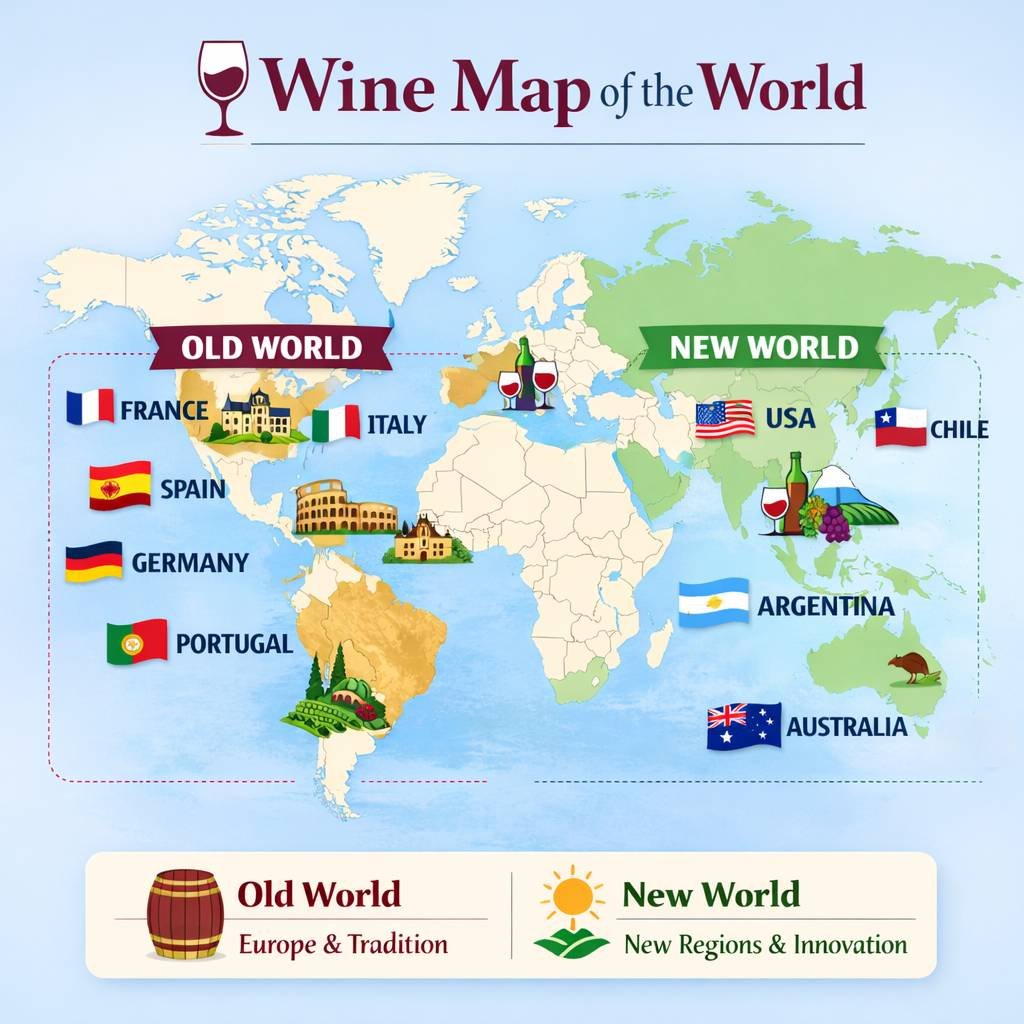
Wine is more than just a drink—it is a reflection of history, culture, and geography. One of the most fundamental ways to understand wine is by dividing it into two major categories: Old World and New World wines.
The term Old World refers to the historic wine-producing regions of France, Italy, Spain, Germany, and Portugal. These countries have been making wine for thousands of years, deeply rooted in tradition.
Old World wines are known for:
Emphasizing terroir (the natural environment—soil, climate, and landscape), more subtle, elegant flavors, lower alcohol levels, strict regulations in winemaking
In these regions, wine is often named after the place it comes from rather than the grape variety. For example, Bordeaux or Chianti reflects regional identity rather than just the grape.
New World wines come from newer wine-producing regions such as United States, Chile, Argentina, and Australia.
These regions began producing wine more recently but have quickly gained global recognition.
New World wines are characterized by:
Fruit-forward, bold flavors, higher alcohol content, modern winemaking techniques, more flexibility and experimentation
Unlike Old World wines, labels in New World regions often highlight the grape variety—such as Cabernet Sauvignon or Chardonnay—making them more approachable for beginners.